Watermarking Digital Image and Video Data A Stateoftheart Overview
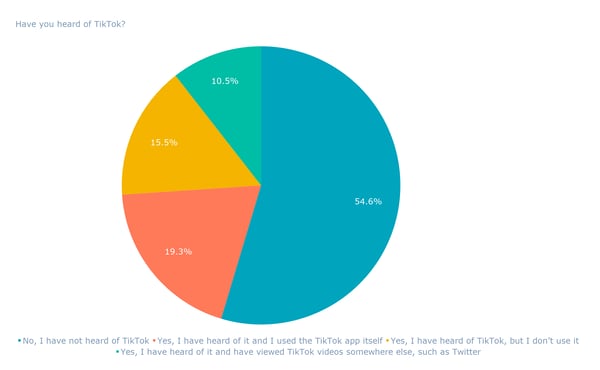
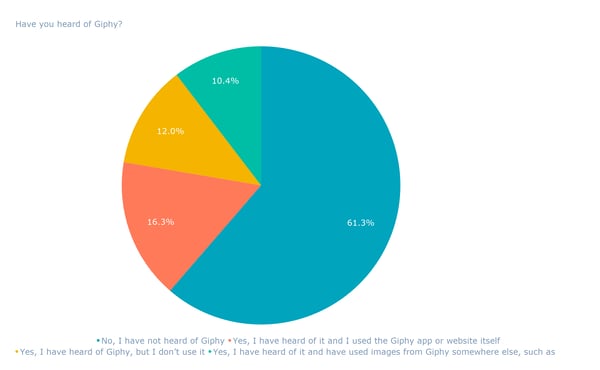
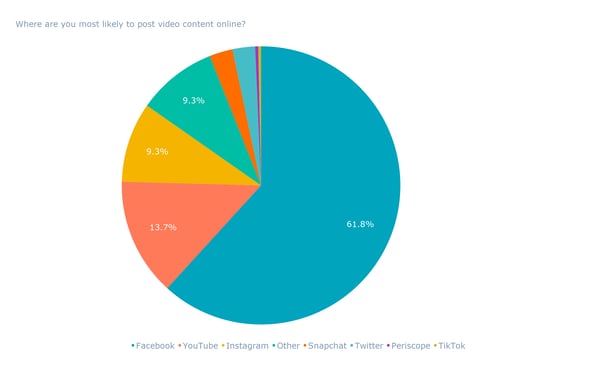
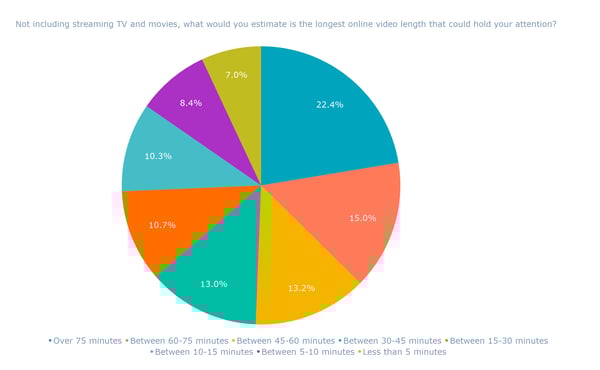
Since belatedly last week, the topic of online video has worked its way into a few headlines. Get-go, it was announced that Facebook has launched Lasso: a short-grade video app seemingly designed to compete with TikTok, which is a similar app assuasive users to upload quick videos that are usually powered past a musical background. For case: Our favorite cover of "Stand up past Me." 😍 movie.twitter.com/qcVTwiPvI5 The same mean solar day Lasso'southward launch was announced, Giphy -- known every bit a database of brusque, blithe GIF images -- appear that it, too, would launch its own short-form video platform. Only about as presently as this new battle for the favored short-course video platform began to break out, new information emerged that other platforms are embracing long-form video -- and by "long," we mean upward of 75 minutes, in some cases. Then we wanted to know: When it comes to online video consumption, where do users really counterbalance in? How familiar are they with these short-form video platforms, how much time do they actually spend watching online video? We postal service these questions -- and others -- to over half-dozen,500 people across the U.S., UK, and Canada to encounter what nosotros could larn about the what, where, and how of online video consumption. Hither's what we found. First, we wanted to measure awareness of these short-form video platforms, starting with TikTok. Over half of respondents -- 54.6% -- indicated that they arenot familiar with TikTok. Then, we posed the same question about Giphy. Data collected with Lucid Here, an fifty-fifty higher per centum of users -- 61.3% -- indicated that they're unfamiliar with Giphy. It poses the question of how well Lasso -- whose parent company, Facebook, made no major announcement of its launch and has no dedicated website -- volition fare in a market that'southward condign more crowded without much sensation. Next, we posed the question: What do you use Facebook for? Data collected with Lucid Hither, we constitute that less than a third of respondents -- 28.7% -- say that their primary employ for Facebook is to lookout man videos. Instead, most people indicated that they mostly use Facebook for keeping upwardly with friends and family unit -- followed past those who said their primary purpose is getting the news. However, when we asked survey respondents -- Not including streaming TV and movies, where do you lot spotter online video? -- over half of them said they practice so on Facebook. Data nerveless with Lucid However, Facebook didn't quite trounce out video hosting platform YouTube, where just over seventy% of respondents say they watch online video. Instead,information technology took the lead in user posting preferences, with 61.8% of respondents indicating that they prefer to share video on Facebook over other platforms. Data nerveless with Lucid We also wanted to know which devices people were using to consume online video. Data collected with Lucid Just over 87% of respondents said that they watch online video on a mobile device, with over half of them indicating they do so via a smartphone. The high rate of online video consumption via mobile could betoken potential growth for curt-form video platforms like TikTok -- even though 2.viii% of respondents listed it as their chief app for watching (and .3% saying they prefer to share video at that place). Where these apps could possibly meet a faster rate of growth is in integrations with apps that are a fleck more native mobile users, such as with Messages app extensions on iOS devices. When we posed the question --Not including streaming TV and movies, what would you estimate is the longest online video length that could hold your attention? -- the results were mixed. Data collected with Lucid The lowest number of respondents -- only seven% -- said they could only maintain attention for a video that was less than five minutes long. In fact, the highest percentage indicated the opposite, with over 20% saying that they believe a video over 75 minutes long could hold their attention. That could explain the popularity of YouTube in before questions, where videos that are twenty minutes or longer announced to exist gaining in favorability amidst creators and viewers alike. At the same fourth dimension, people seem to downplay the amount of time they spent watching online video each day. Data collected with Lucid Although a decent amount claim that they could sit through a feature-film-length video, near also say they spend less than an hour watching online video each day. For now, it seems that the trajectory of short-term video is ambiguous at all-time. Snapchat, for instance -- which some telephone call a pioneer in the surface area of short, imperceptible videos -- has actually shown to be shrinking, not growing. "Making short, shareable videos designed to entreatment to the broadest audition possible has given way to something," writesWired'due south Emma Grayness Ellis, "not only longer, simply more niche." That could explain why platforms like Facebook and Instagram are launching platforms defended to longer-class videos (Scout and IGTV, respectively) -- because, it seems, our preferences could be leaning toward video content that is more enriched and in-depth. This potential growing preference should be observed by marketers and those creating video on behalf of their businesses. While information technology may not be wise to entirely invest in 75-minute videos, it could be worthwhile to ask: What kind of story would my audition like to see and hear with this amount of time? Equally always -- stay tuned. Desire more than data? Attain out on Twitter to allow us know what news and trends you'd like united states of america to ask questions virtually.
People Are Fairly Unfamiliar With Brusque-Class Video Platforms
People Have a Mixed Human relationship With Facebook Video
.png?width=600&name=What%20do%20you%20use%20Facebook%20for_%20(1).png)
![Not including streaming TV and movies, where do you watch online video_ [Platform]](https://blog.hubspot.com/hs-fs/hubfs/Not%20including%20streaming%20TV%20and%20movies,%20where%20do%20you%20watch%20online%20video_%20%5BPlatform%5D.png?width=600&name=Not%20including%20streaming%20TV%20and%20movies,%20where%20do%20you%20watch%20online%20video_%20%5BPlatform%5D.png)
Most People Watch Online Video on a Mobile Device
![Not including streaming TV and movies, where do you watch online video_ [Device]](https://blog.hubspot.com/hs-fs/hubfs/Not%20including%20streaming%20TV%20and%20movies,%20where%20do%20you%20watch%20online%20video_%20%5BDevice%5D.png?width=600&name=Not%20including%20streaming%20TV%20and%20movies,%20where%20do%20you%20watch%20online%20video_%20%5BDevice%5D.png)
Simply, People Say They Aren't Enamored With Super-Short Videos
.png?width=600&name=Not%20including%20streaming%20TV%20and%20movies,%20how%20much%20time%20do%20you%20spend%20each%20day%20watching%20video%20online_%20(1).png)
Originally published Nov 12, 2018 4:53:31 PM, updated December 11 2019
Source: https://blog.hubspot.com/marketing/online-video-consumption-preferences-data
0 Response to "Watermarking Digital Image and Video Data A Stateoftheart Overview"
Post a Comment